Alanya Rehberi · 20 November 2026
The History of Alanya: From Pirates to the Seljuks
From ancient Korakesion to Alaiye, the Seljuk winter capital, to today's holiday town: Alanya's story spans more than 2,000 years.
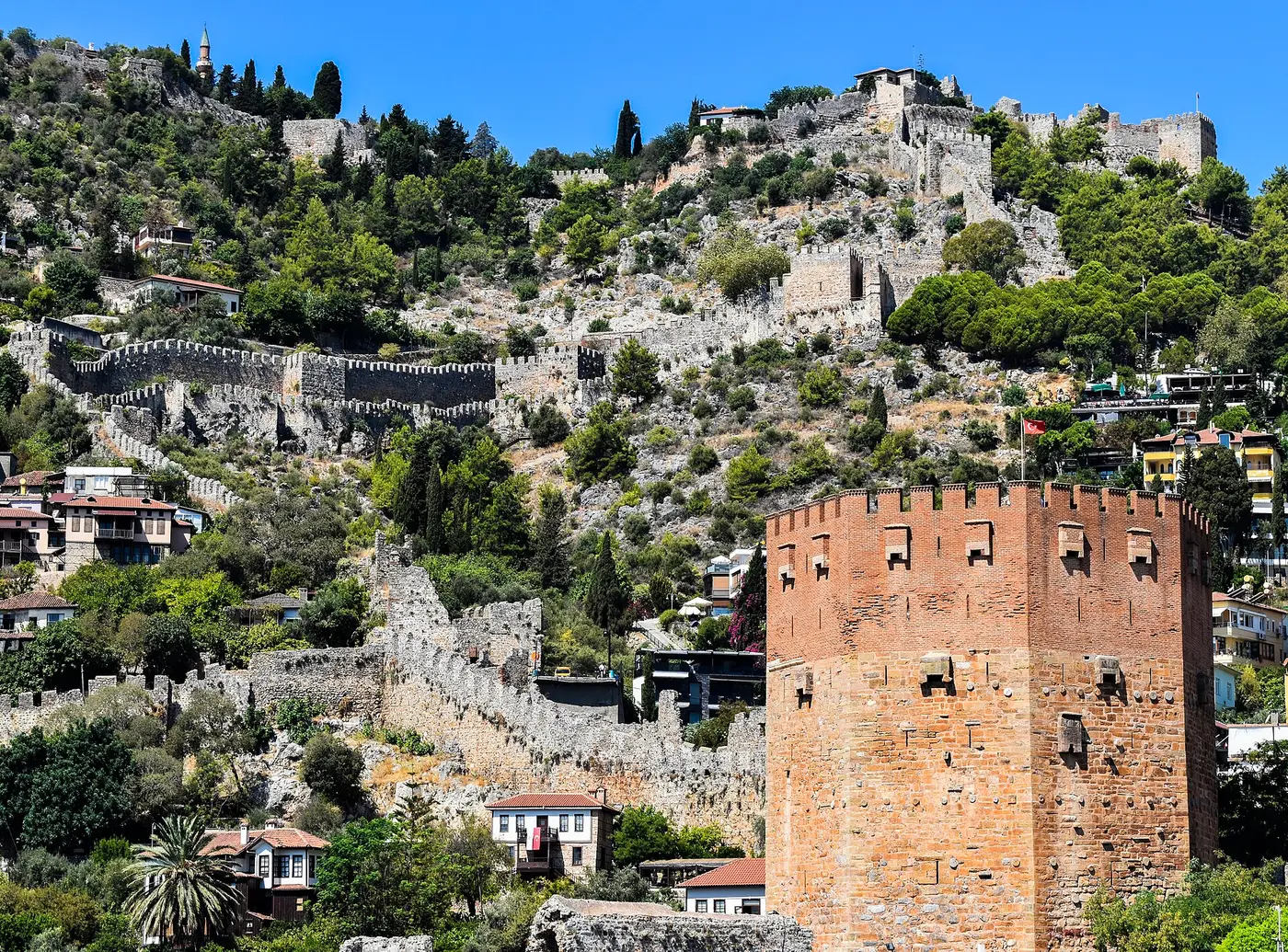
Alanya is built on a rocky peninsula that juts into the sea. For thousands of years this rock has been both a natural fortress and a sheltered harbour, and the town's history is largely the story of this headland.
Antiquity: Korakesion and the pirates
In ancient times the town was called Korakesion (Latin: Coracesium) and stood on the border between Pamphylia and Cilicia. Its hard-to-reach peninsula made an ideal base for the Cilician pirates who terrorised the Mediterranean in the 2nd century BC; the pirate leader Diodotos Tryphon used it as his headquarters.
Rome put an end to the piracy that threatened its trade routes in 67 BC, when the fleet of the general Pompey defeated the Cilician pirates and the region came under Roman control.
The Cleopatra legend
According to legend, Mark Antony gave the Cilician coast to Cleopatra, Queen of Egypt; the forests of the Taurus Mountains supplied timber for the Egyptian fleet. Cleopatra is said to have bathed on this shore, and the town's most famous beach takes its name from the story.
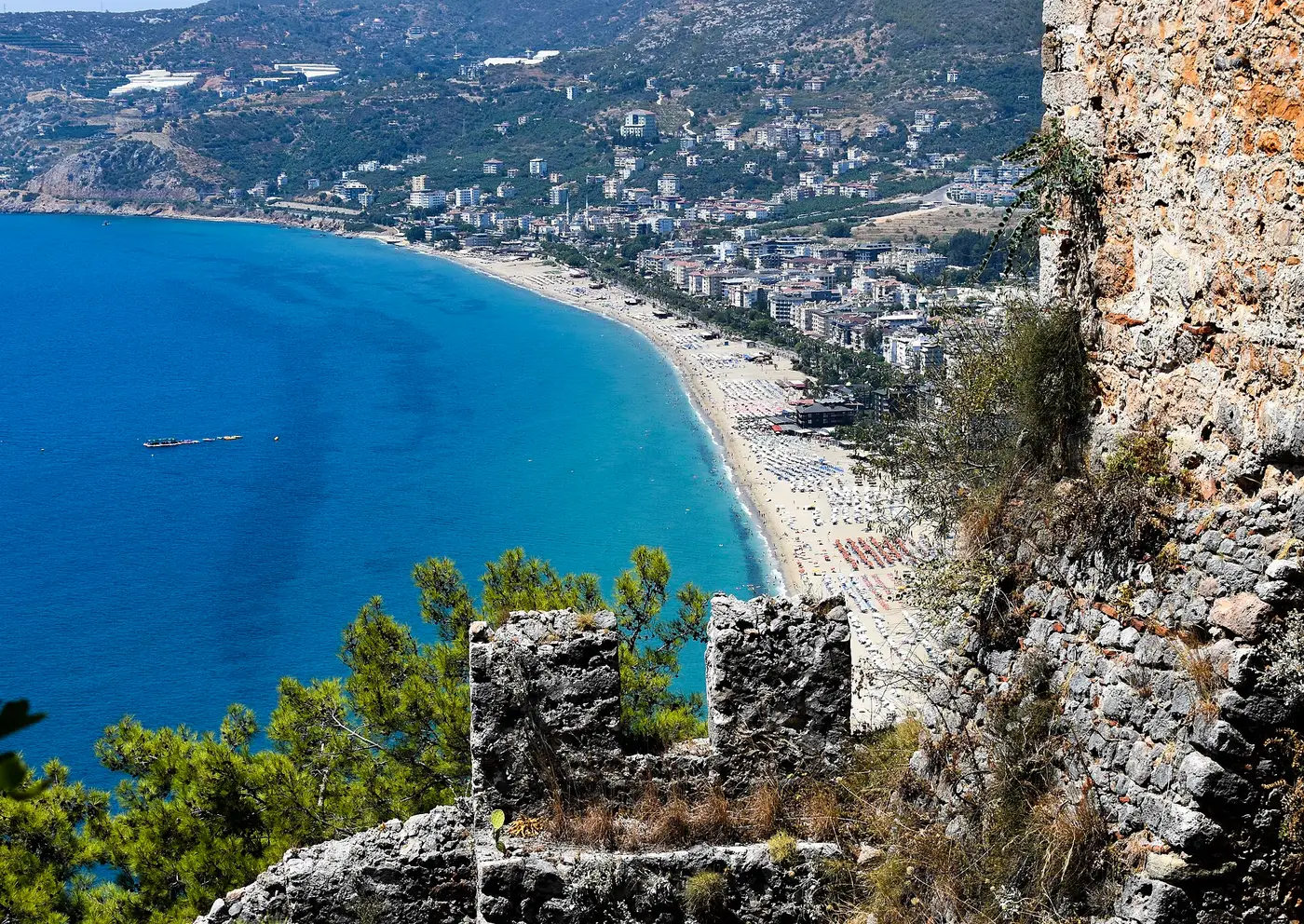
Photo: Julian Lupyan, CC0 (Wikimedia Commons)
Byzantine times: Kalonoros
In the Byzantine period the town was known as Kalonoros, "beautiful mountain". The small Byzantine church inside the castle dates from this time.
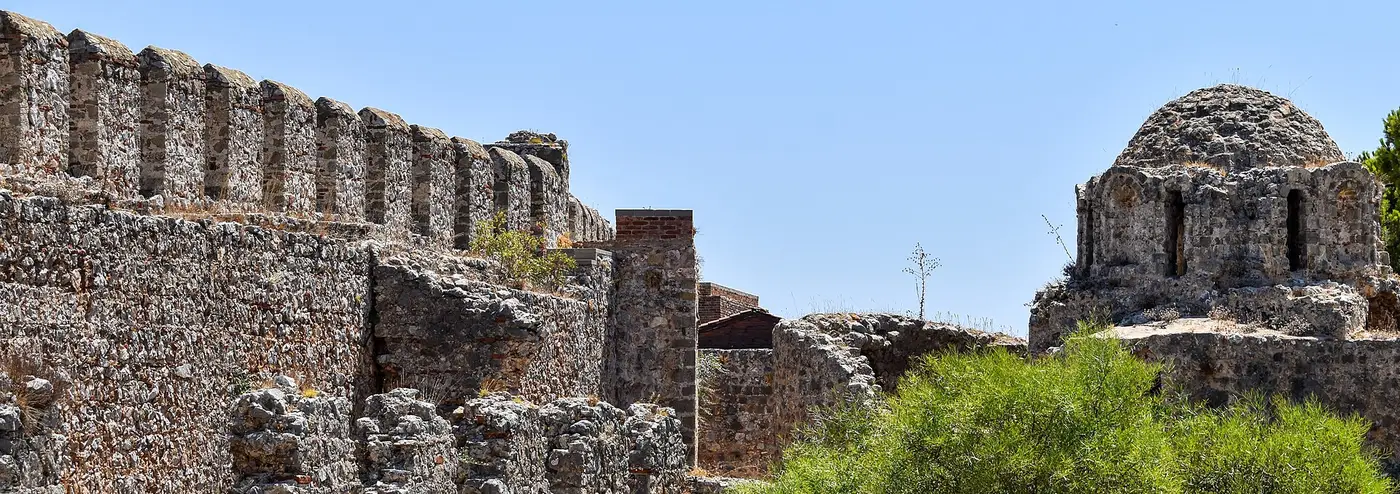
Photo: Julian Lupyan, CC0 (Wikimedia Commons)
The Seljuks and Alaiye
The town's present look comes from the Seljuk era. Sultan Alaeddin Keykubad I took the town in 1221, named it Alaiye after himself, and made it the Seljuks' winter capital and naval base.
The buildings of this period are still the town's symbols:
- The Red Tower (Kızılkule, 1226): an octagonal red-brick tower built to guard the harbour.
- The Shipyard (Tersane, 1228): a five-bay Seljuk shipyard carved into the rock, one of the few medieval shipyards in Anatolia to survive.
- The walls and inner castle: kilometres of walls around the peninsula and the inner castle at the top.
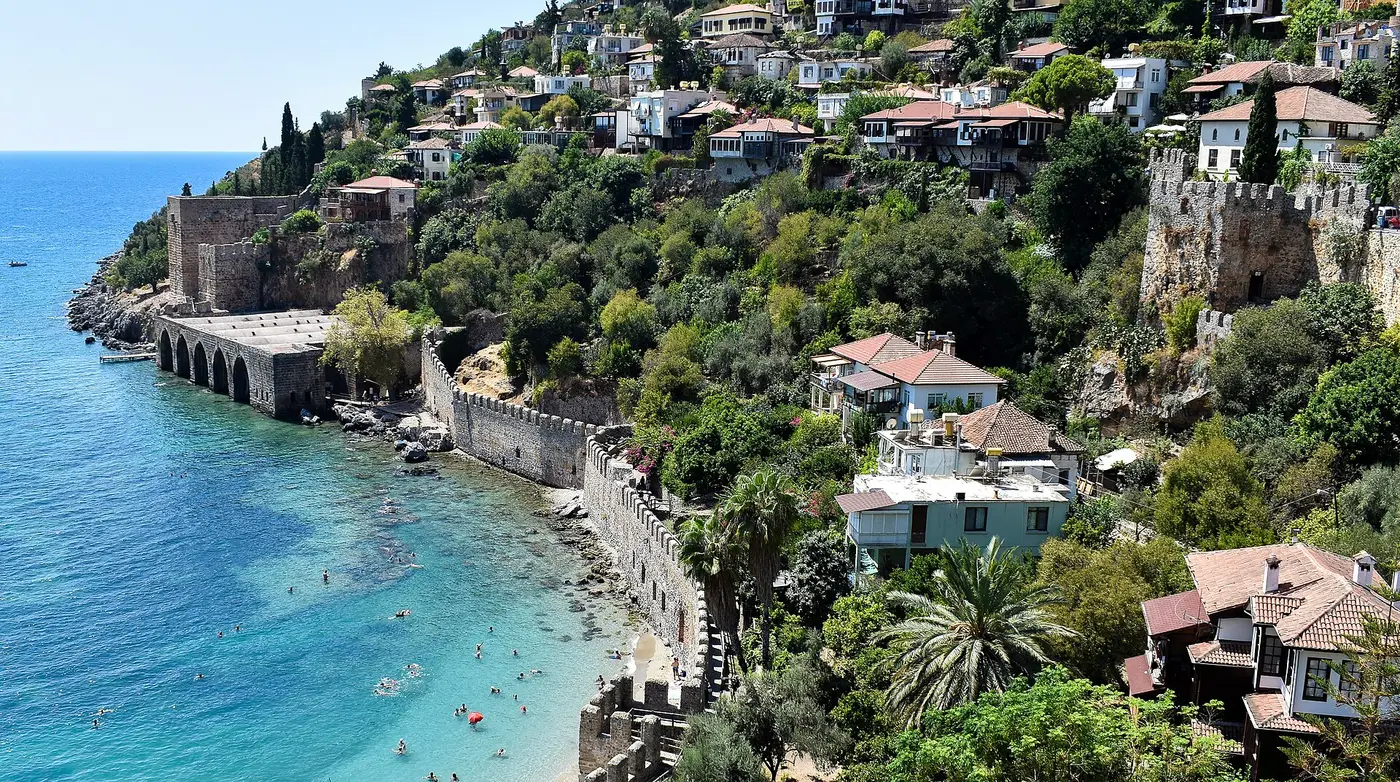
Photo: Julian Lupyan, CC0 (Wikimedia Commons)
Karamanids, Mamluks and Ottomans
As the Seljuks weakened, the town passed to the Karamanids, who sold Alanya to the Mamluks of Egypt in 1427. In 1471 it became part of the Ottoman Empire under Gedik Ahmed Pasha. Under the Ottomans Alanya remained a small but important coastal town with its castle and harbour.
The Republic and tourism
In the Republican era the town was renamed Alanya. Atatürk visited in 1935, and the house where he stayed is now a museum. In 1948, while stone was being quarried for the harbour, Damlataş Cave was discovered; the visitors who came to see it were the first step of Alanya's tourism.
From the 1980s Alanya grew into one of Türkiye's largest holiday destinations. Today, with thousands of foreign residents who also live here in winter, its historic peninsula and kilometres of beaches, it is a town that is alive all year round.
See the history for yourself
Alanya Castle, the Red Tower and the Shipyard are close to each other and can be visited in one day. For all the sights, see our article Places to visit in Alanya. To book a private transfer from Antalya Airport to your hotel, or from your hotel to the castle, use the search box at the top of the page.
Need a transfer?
Private transfers from Gazipaşa Airport at fixed prices.